Trichostigma octandrum
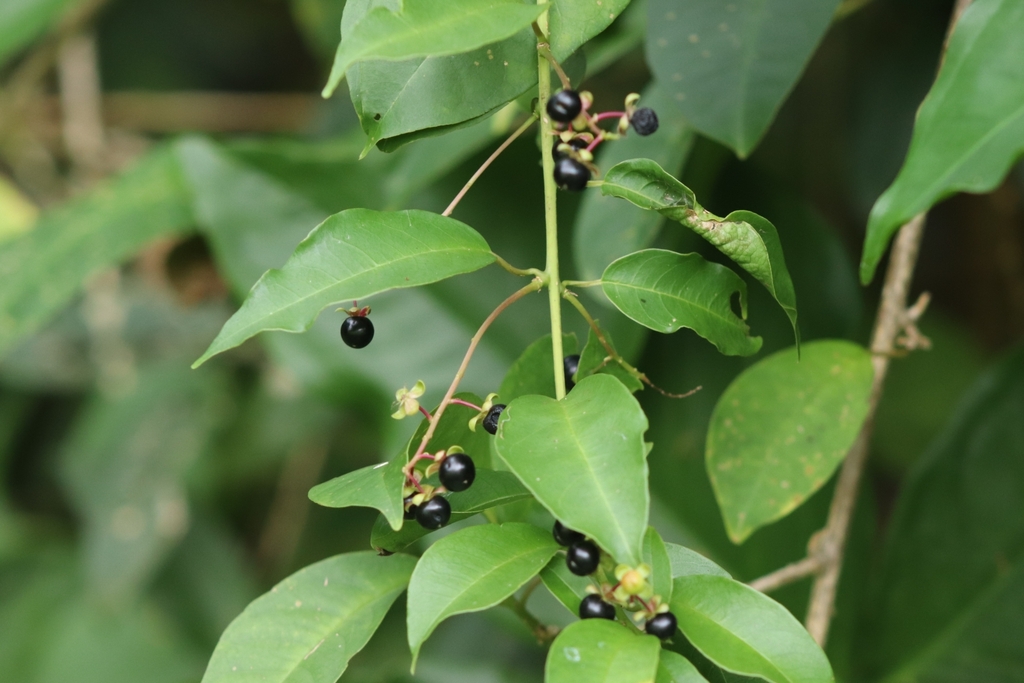
The size of the plant and of its bag can vary a little from the photograph — each one grows at its own pace. We keep them as consistent as we can.
Overview
Hoopvine, bejuco canesta in Spanish, is a native vine whose name says it all: its split stems have been used for generations to weave baskets, make furniture and even barrel hoops. Its clusters of tiny flowers give way to purple berries whose juice makes a dye. It grows from Florida and Mexico, through Central America and the Caribbean, to Argentina. Useful, pretty and truly local.
Culture
It can grow as a shrub or a free-standing vine up to 6 meters tall and 10 wide, with stems that climb or sprawl. It prefers warm, humid lowlands and well-drained soil rich in organic matter, and adapts to anything from partial shade to full sun. It's used to cover pergolas and arbors.
Edible Uses
The young leaves are eaten boiled as a vegetable.
Medicinal
Traditionally used for heart palpitations, colds, water retention and asthma, and on wounds.
Traditional uses for information only. Not a substitute for advice from a health professional.
Agroforestry
A support species of the medium stratum with a secondary life cycle that provides material for basketry and shade over structures. Its berries feed birds.