Zingiber officinale
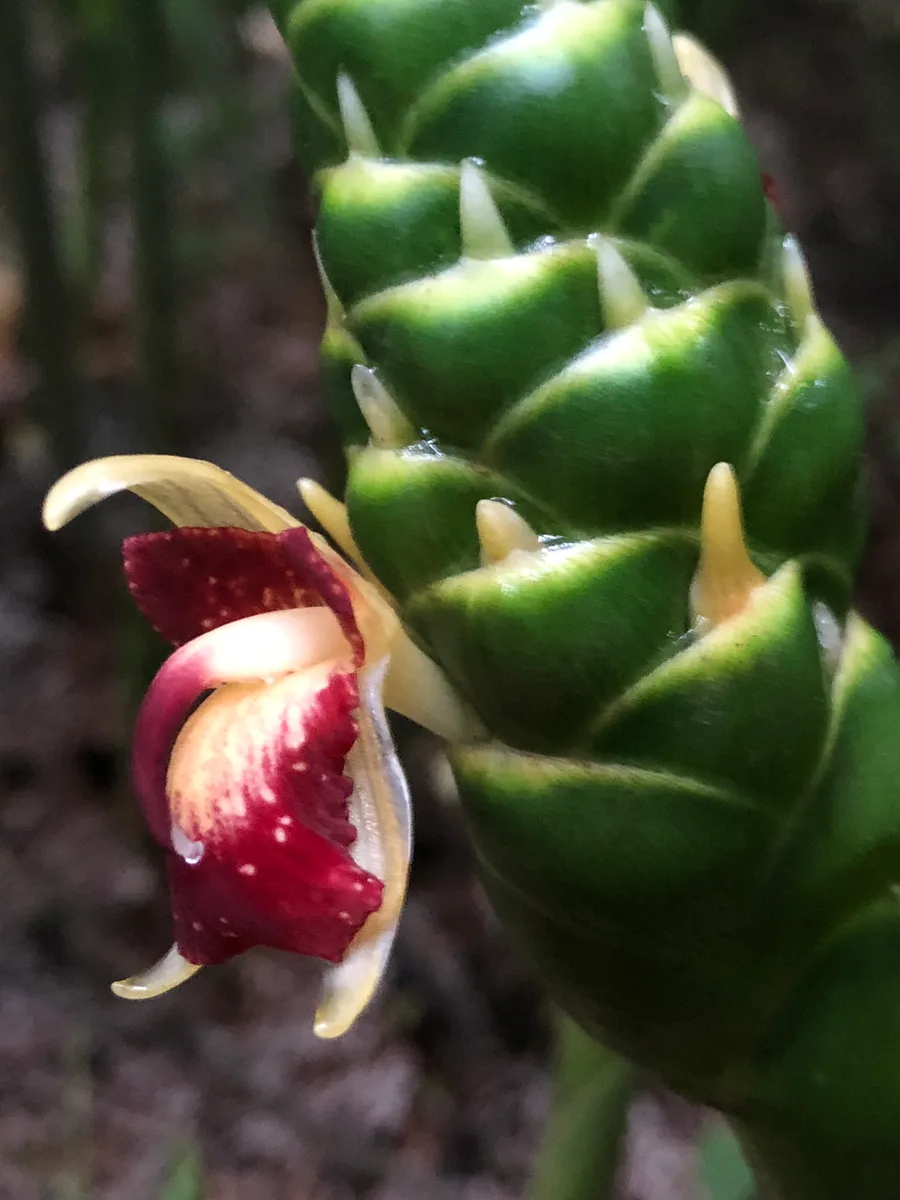
The size of the plant and of its bag can vary a little from the photograph — each one grows at its own pace. We keep them as consistent as we can.
Overview
Kitchen and medicine cabinet in one plant: the rhizome that spices up soups and teas is also one of the world's oldest home remedies. It has never been found in the wild: it was domesticated thousands of years ago in Southeast Asia and travelled the spice routes to the whole tropics. It's harvested in under a year, so it's one of the first rewards of a new system.
Culture
- Habit
- Perennial
- Height
- 1.50 m
- Cultivation Status
- Cultivated
Plant a piece of rhizome with 2–3 buds, in loose, humus-rich, well-drained soil, in part shade or sun; it likes a pH of 6 to 7. For young ginger, thin-skinned and mild, harvest at 5–6 months; for mature, hot ginger, at about 10 months, when the stems die back. Keep a few healthy rhizomes as seed for the next planting. On slopes, plant with mulch so you don't lose soil.
Edible Uses
Fresh grated rhizome brings heat to soups, stir-fries, drinks and teas; dried and ground it is even hotter. Young ginger is pickled, like the ginger served with sushi, or candied. The shoots and tender leaves are edible too, and the leaves can wrap food as it cooks.
Medicinal
One of the most widely used traditional remedies in the world, especially for nausea, digestion and colds, and one of the few with good scientific evidence, particularly for nausea. A tea of fresh ginger is the most common home use. Its pungent compounds, the gingerols, account for both the flavor and much of its medicinal reputation.
Traditional uses for information only. Not a substitute for advice from a health professional.
Agroforestry
A placenta species: it covers the ground in the system's first months, between newly planted trees, and is harvested before the shade closes in. Because it tolerates partial shade, it can also go under young trees. It protects the soil and brings early income while everything else grows.