Zingiber spectabile
The size of the plant and of its bag can vary a little from the photograph — each one grows at its own pace. We keep them as consistent as we can.
Overview
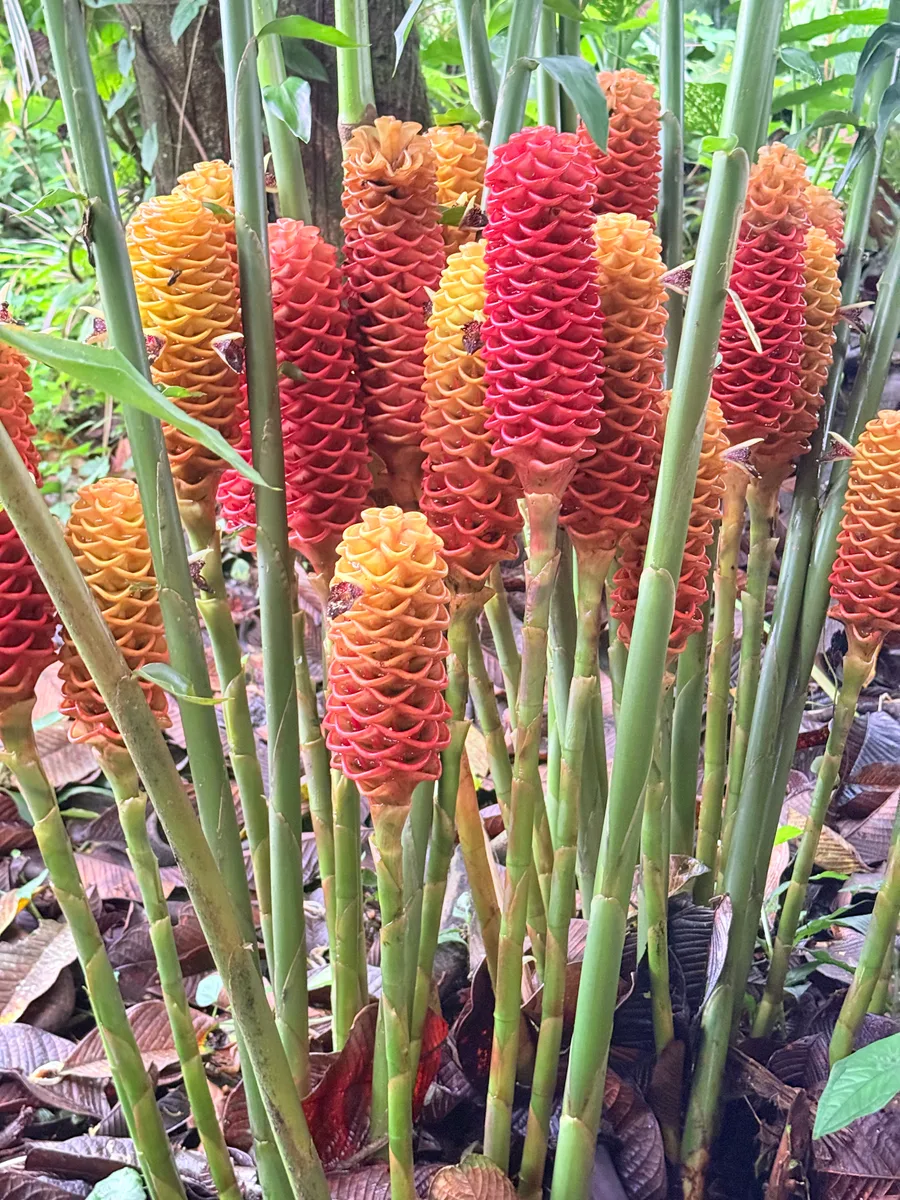
Beehive ginger is one of the strangest and most rewarding flowers you can cut: a cone of waxy, stiff bracts packed like the cells of a hive, starting yellow and staining red from the bottom up. The true flowers peep out between the bracts, small, purple and white with yellow dots. In a vase it lasts 2 to 3 weeks, and on the plant it holds for months. It's an ornamental ginger from Southeast Asia that forms clumps up to 3 meters tall.
Culture
It wants partial shade, warmth and humidity: fertile, loose soil, rich in organic matter and well drained, moist all year. In our climate it flowers mostly in one marked flush, with scattered flowers the rest of the year. Multiply it by dividing the rhizome; every piece with a bud starts a new clump. The clumps widen as they go, so give it a good meter of room.
Edible Uses
The rhizome has been used as a flavoring in Southeast Asia, but this species is grown for the flower, not for the kitchen: for the pot there are common ginger and turmeric.
Medicinal
We don't offer it as a medicinal plant.
Traditional uses for information only. Not a substitute for advice from a health professional.
Agroforestry
In the catalog for its beauty, not for a role in an agroforestry system.